
Explore Manipuri Rin Phi silk, an exquisite handloom textile from Manipur
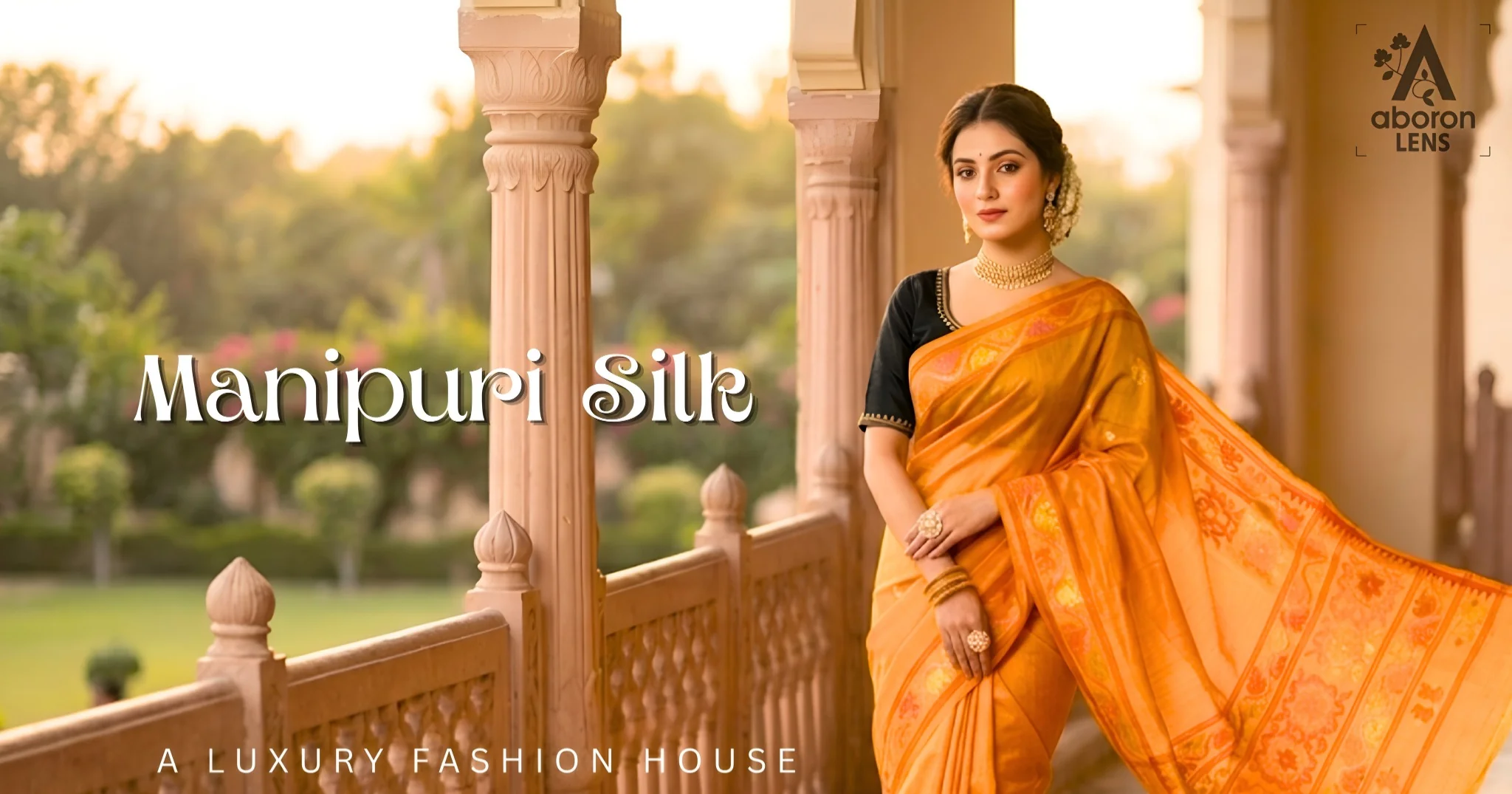
Today, let’s take a trip to Manipur, the ‘land of gems,’ where the weaving tradition is deeply connected with the local tribes.
Dating back, before the Christian era started, the Meitei community has believed that their sacred goddess Panthobi wanted a delicate spider work on her dresses.
Behind their belief, there was an ancient manuscript named Leinunglon. In the Meitei culture, this book has been considered the most sacred thing. From this concept, the Meiteis started to weave their own fabric.
Till now, a story revolves around this goddess, which depicts that the Goddess was so much in love with this intricate pattern of spider web that she wanted to imitate it on her dress using materials plucked from the soft membrane of wood and bamboo.
Many said this is the first version of the Manipuri fabric, which was created in the iconic khwang iyong, which means the lion loom.
But the local lore said that during the reign of King Khui Tompok, the royal couple discovered mulberry worms growing on the grave of their deceased daughter, Leima.
They started believing that they were the incarnation of their little girl. The king and queen started to calle dthem as the leima till. Which means the worm was born from the royal princess’s grave.
The royal family started to nurture these silkworms, which later became known as the Leimapokpham.
Now, all the Manipuri silks that are made here are made from it.
Manipuri Silk Rin Phi is a vibrant, coloured legacy of Manipur’s handloom artistry
In Manipur, the weaving is totally a woman’s genre. Girls are brought up in their childhood by listening to the hum of the looms. That's why they have an innate tendency to weave.
The traditional lower wrap, or the sarong, is called the phanek. A plain stripe-free wrap, which is used for casual wear are called Achamba phanek.
The embroidery border is filled with a spiral, which is called a khoija design, and the round-shaped design, which is called an akoibi design, is called the Maik naibi phanek.
The white and the pristine cream wrap worn by the exclusive Maibi are called Pungou Phanek.
A loosely handwoven thik and cotton silk is also called RIn-Phi fabric.
The colours of the Manipur silk are also very interesting. The Red silks resemble channelling courage, whereas the green is resembles pure peace and growth.
The designs are also very unique. The famous circular designs are called akoyabi. Now, a coiled shaped designs are also famous, inspired by the legendary snake god of King Manipur.
An extra weft technique is used to weave all these beautiful silks.
FAQs
1. RinPhi Saree is from which state?
The Rin phi saree is from the state of Manipur.
2. Rin Phi saree price?
The RIn phi saree starting range begins from 5k, and with the intricate designs, the price rises. But the most beautifully designed one costs 50K and more.
3. Which Rin Phi dresses are now famous?
Rin Phi Shawl, handloom heritage, Rin Phi silk, Rin Phi handwoven silks are now a very famous fabric these days.