

Know how Tagore is associated with the Batik Print
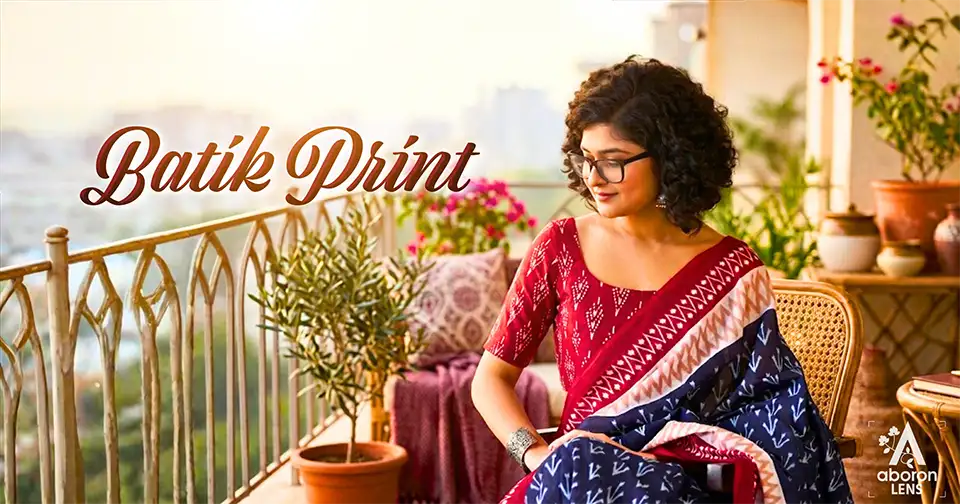
The smell of hot, melting wax. That’s the first thing that hits your nose when you walk into a traditional Batik workshop.
If you wonder what Batik is?
Let me tell you, Batik is a form of art done on a saree, using melted wax.
Imagine you are pulling out a saree from your rack, which is a living canvas of patience. And just by looking at it, the first word that comes to your mind is, “ Nice prints.”
But how does the wax resist lines formed the most beautiful designs? Let’s rewind the clock and go back to ancient Egypt.
Know the Origin of Batik Print
Previously, Egypt and India used to practise the wax resist dyeing centuries ago for decorating household items like tablecloths, curtains, and other everyday-use fabrics.
But the origin of Batik was Java, Indonesia. The word Batik also comes from the Javanese word “ambatik,” which means a cloth of fabric with little dots.
Back in those days, Batik was considered the symbol of status. Nobody uses it for daily-wear.
The royal Indonesians also customised their fabrics with exclusive designs named “Pola Larangan.”
The history claimed that these exclusive designs are not for the commoners. The designs maintain so much exclusivity that Indonesian Royals can be detected easily by this.
Know How Batik Print Came to India
But how did this fabric come from Java to India?
Here comes the contribution of the famous poet Rabindranath Tagore.
In the year 1920, Tagore travelled to Java, apart from loving their culture and customs, he deeply fell in love with this print. And brought this beautiful craft to India along with him.
He also encouraged the artisans from Shantiniketan to adopt this technique. And infused it in their craft so that the overall beauty of shantiniketani fabric got enhanced.
This is how the iconic Shantiniketani Batik print was born, and the Indonesian tradition became the ‘boho style’ of the bongs.
Now, let me explain to you how the Batik printing is done.
Know How the Batik Print is Done?
The Batik artists first attach a spout-like copper tool called ‘canting’ to bamboo.
Using this tool, the liquid wax is spread on the raw silk or the cotton fabric.
When the wax solidified, the whole fabric was dipped in the colour-dye.
The waxed part resists the colour, and the remaining parts got coloured.
After the process ended, the melted wax was removed manually from the surface of the fabric, and boom! A beautiful design starts unveiling.
During the whole printing process, the fabrics got intentionally crumpled, so that the tiny drop of dyes seeps through the threads well.
Know some specialities of Batik Print
For a long period of time, batik was confined within the intellectual wardrobes. Only the artists, professors or the elite members of the society preferred to wear this fabric.
But fashion is like a flowing river. It has its own way to rectify, modify and even change the rules.
Today, batik has become one of the must-have items in the commoner's wardrobe.
Indigo, madder, and brown are the most effective earthy tones of the Batik print. But today, with the change of Gen Z tastes, the Batik print is also evolving. Instead of the earthy tones, designers are also dropping the neon pink, pastel and stark monochromatic colours onto mulmul cotton, Chanderi and Tussar silk, which diversifies the variants of the Batik Prints.