
Zari Work in India: A Journey Through History, Craft and Culture
If you are someone from the 70s, 80s, or even older, you might have gone through any one of the following: Mughal-e-Azam, Pakeezah, Ramayana, Mahabharata, Krishna.
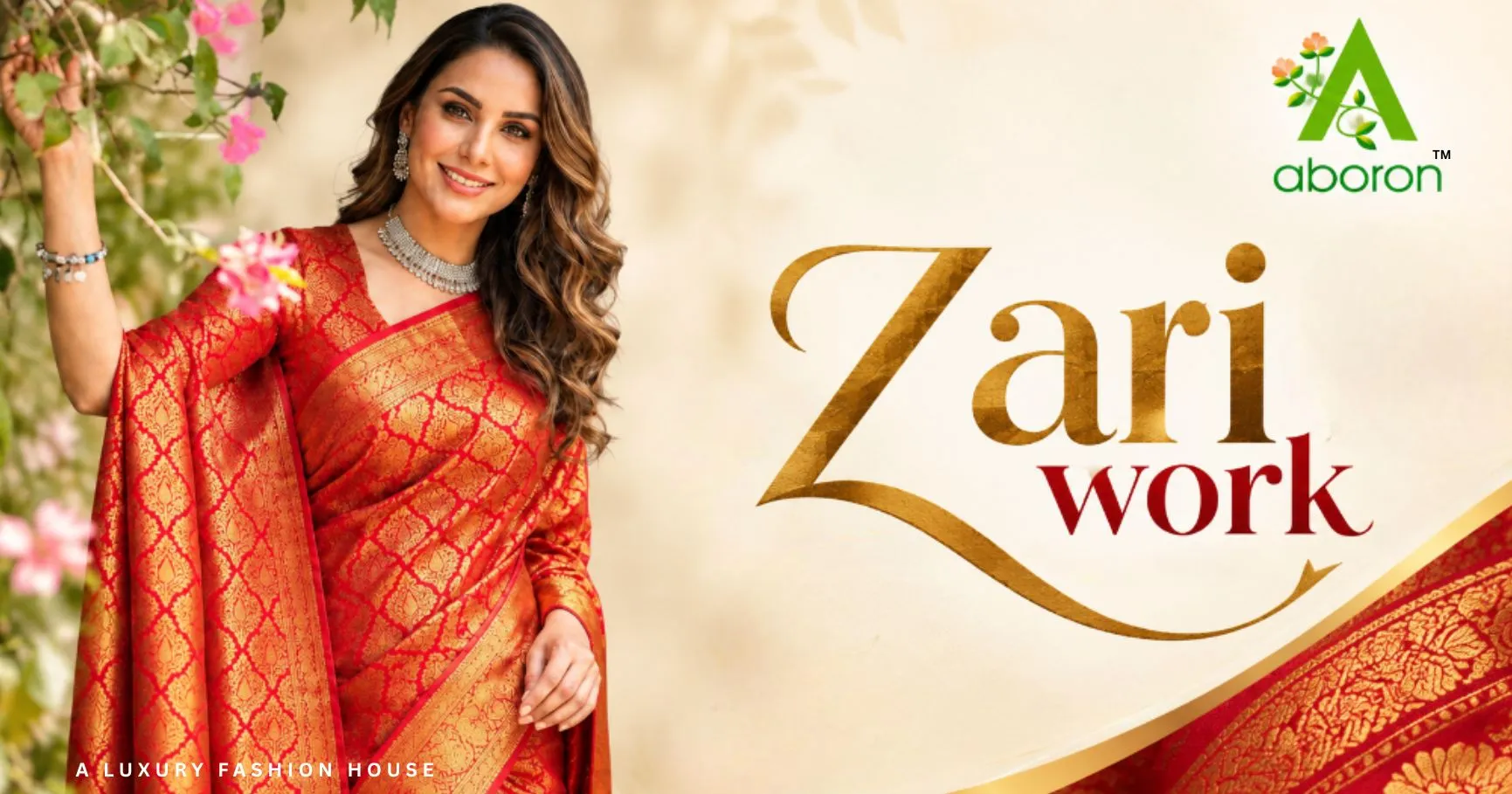
So the question is, what's really common? Many things could be common. But if you look minutely at their dressings, you would see something common: Zariwork.
The History of Zari is closely connected with royal patronage, skilled artisans and the evolution of India's textile heritage. From ceremonial garments to treasured sarees, zari continues to represent the beauty of craftsmanship and the enduring language of luxury.
The Origins of Zari in India
Zari is a tradition of golden glimmer. It's been woven into Indian craftsmanship for generations.
Different studies say Zari work developed in India being influenced by Persian craftsmanship.
This work found a strong place within the country's flourishing textile traditions. Over time, Indian artisans adapted these techniques and localized this technique to perfection.
The early history of Zari reflects its association with wealth and refinement. Gold and silver threads were used on royal garments, ceremonial textiles and objects of prestige.
From Royal Courts to Indian Textiles
Just type on YouTube, “Jab Pyar kiyato darna kya.” We are referring to the magnum opus of Indian cinema, “Mughal-e-Azam.”
Glimpses of the grand presentation of Anarkali (Madhubala) will surely mesmerise you…and of course, the awe-inspiring Zari work costumes worn by them.
Court workshops encouraged artisans to experiment with intricate floral, paisley and geometric designs.
The History of Zari Across India's Textile Traditions
Every great art undergoes an evolution. Zari travelled beyond royal courts and regional weaving communities and attained a distinctive character.
It became renowned for its elaborate metallic motifs. While Kanjivaram sarees incorporated zari into their striking borders and pallus, Paithani and other regional textiles developed their own interpretations.
Today, Zari has travelled far beyond its royal beginnings. The designers reinterpreted it through lighter borders, contemporary motifs and unexpected combinations of colour and texture. Today, Zari can make a traditional drape feel regal while fitting naturally into a modern wardrobe.
The story of zari is ultimately a story of continuity. Threads may change, techniques may evolve, and designs may become more contemporary, but the craft continues to connect artisans with generations of Indian textile lovers. The History of Zari lives not only in museums or royal archives, but in every carefully woven or embroidered thread that keeps this heritage alive.
FAQs
1. I wish to know more about the different types of zari work. What are they?
Zari may be woven directly into fabric or applied through embroidery. Common traditions include woven zari, zardozi and hand-embroidered metallic work.
2. How is Jari work done?
Weaving or embroidering metallic threads is used to create your favourite zari. Skilled artisans use specialised techniques to create these beautiful saree borders.
3. What is zari work?
Zari work is decorative textile craftsmanship using metallic threads to create motifs, borders and patterns on fabrics such as silk and cotton.
4. Which sarees are famous for zari work?
Banarasi and Kanjivaram sarees are especially renowned for their rich zari work. Paithani and several other regional textiles also feature it.
5. Is zari made from real gold?
Historically, zari could contain real gold or silver. Modern zari is generally made with metallic-coated threads and other less expensive materials.
6. What materials are used for zari work?
Modern zari commonly uses metallic threads, silk or cotton bases, needles and other embroidery tools. The exact zari work material varies by technique.