

Know how Tanchoi Saree is closely associated with Benarasi sarees
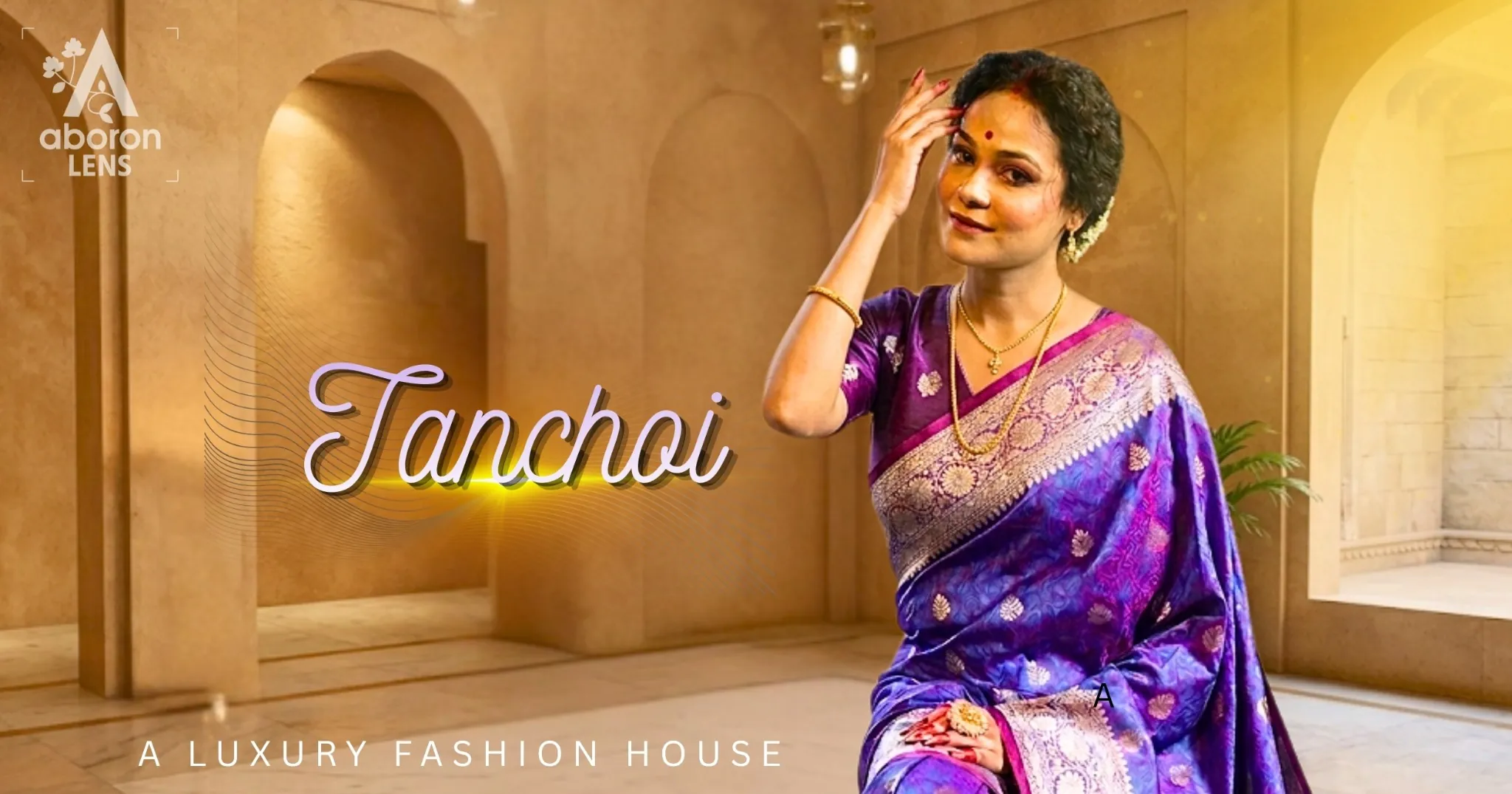
Have you ever heard about the love story that once happened between an old-age silk and a cross-border? Though this love story sounds like an inter-caste marriage, it would always be remembered as the most epic love story in history.
And if you still want to see these love-birds, buy a tanchpoi saree for yourself.
Yes, dear reader, you read me right.
Tanchoi is nothing but the result of silk falling in love with cross-border.
Know the history of the Tanchoi saree of Gujarat
In the mid 19th Century, three Parsi brothers from the joshi community in Surat first started to tie up with a wealthy merchant to sail all the way to China to learn the weaving secret of silk brocades.
They started their voyage and, after a few months-long journey, they finally reached to chinese master weaver ‘Chhoi’ with the urge to learn the hanloom works.
But he just refused to teach them his real method.
So, with a broken heart, they returned to India. And after a few days, they combined the Gujarati word tan, which means the tree, and their teacher’s name Chhoi, and started weaving sarees in their own formula, naming it the tanchoi saree.
Still, this saree is considered a monument of gratitude and also a cross-cultural bond.
Know some specialities of Tanchoi saree
The specialty of a tanchoi saree is that, while weaving this, a single or double wrap is used with five multi-colored weft threads.
For this technique, both side of the saree looks perfect to wear.
The back side, as well as the front side, looks perfect and flawless.
The saint-like, holographic texture of the saree makes this saree look subtle yet glamorous.
Know how this saree revived from a brutal onslaught
But these sarees are also facing the downfall during the early 20th century; European fashion took over the Indian market by then. And the metropolitan girls started wearing go-go boots, ignoring tanchoi as one of their choices.\
The looms started closing, and Tanchoi just went extinct from the textile industry.
But the Benaras weavers stepped in to revive this Gujarati art. They took this Chinese-Parsi technique and infused it in the Banarasi soul. That's how the Tanchoi saree remained till now as a vintage art of India.