

Indian Textile History is Threaded Through Time. Know the 5000-Year History of Indian Sarees
Do you know, when you hold onto one of your dearest ones T-shirt, you don’t actually bother about its faded colour, or a little hole. All that matters to you is its smell, as it reminds you of someone you really love.
So in India, you really don’t just wear a cloth; we emotionally get attached to the cloth. That's why we do not just wear a saree, we cherish the saree.
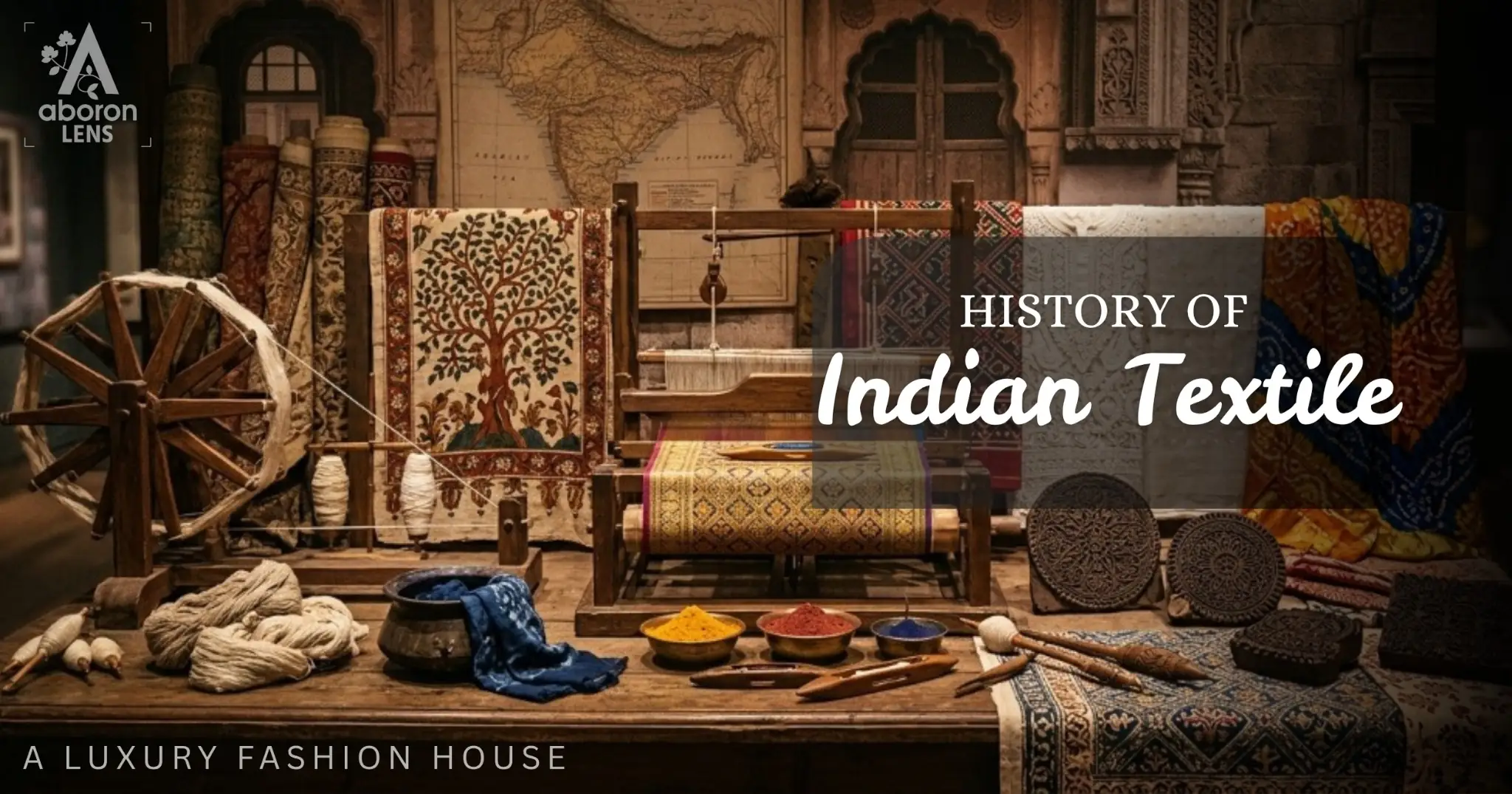
India does have a long history of weaving textiles. Proudly, we are carrying this 5000-year-old heritage, which can simply make the modern fashion feel too basic.
So welcome to the original place of the Sarees, India. And let’s delve deep to know its history.
Know when the printed and painted textiles were born?
Before the medieval era, Freehand Artists are appointd to make the sarees in their own authentic style. This is how each saree maintain their distinctive identity and individuality.
But during the early medieval period, printing blocks were introduced to the weavers in the region of Gujarata and Kutch.
Though the historians claimed that painting and printing textiles are quite different from each other. During that era, the printed sarees were done using a brush or a Kalam. These styles of designs were completely free from repetitive designs.
Then came the block printing, with the convenience of producing sarees in bulk within a couple of days.
These types of designs are structured, reliable, and easy to paint. But weavers needed to showcase their skills as well, which is why they started to mix the hand-painted designs with the block prints. And make a unique patterned saree which looks like absolute magic.
Know how the Indian Textile became a Global Star
If you look for the earliest specimen of Indian printed textiles, we need to go back to the 2300 to 1750 BC. In the Quetta region of the Indus civilisation, you can still find ancient dye vats, some fragments of dyed cotton, which still prove that textile art is one of the most ancient crafts practised by our ancestors.
Dyed cotton stuck to a silver jar in Harappa is the most famous finding of historians, still analysed and discussed by textile experts.
But due to exports, the Indian fabrics were not constrained only to India, it spread by land and sea to the Black Sea, the Mediterranean, the Persian Gulf, the Red Sea, and the Levant
Ancient Greek physicians like Ctesias in the 5th century BC wrote about how crazy the Persians were for Indian cotton.
Even the Indian resist-dye fabric found in the Red Sea port, named Al Fostat, is also proof that our Indian fabrics became the global superstar even before the internet was invented.
The word 'Chintz' actually comes from the Hindi word cheent, which means spotted or variegated. Westerners fell so hard for it that they renamed it chites, chindneys, and palampores.
In the Middle Ages, saree lovers were divided into two groups, and so were the artisans. There were two different artisans group are available. The first group used to cater to the elite export market of China, Thailand, Java, Egypt, and Arabia. and the second one catered to the Royals by creating the exclusive double-sided chintz, beautiful wall- hangings and the bedsheets called palagposh by the civilians of that era.
Our weavers were also the ultimate chameleon, as they were able to adopt any designs as per the taste of the royals, as well as the foreign client base.
The historians claimed that during that era our weavers didn’t just play with the colours, they actually owned them.
A Greek traveller of that era once wrote in his travelogue that our craftsmen are not just mere fabric dyers, they look like ‘wool-bearing trees,’ from where Tussar, Muga, to Eri, the most colourful fabrics were born.