

Nauvari Saree, The Saree where the Maratha Pride is inscribed
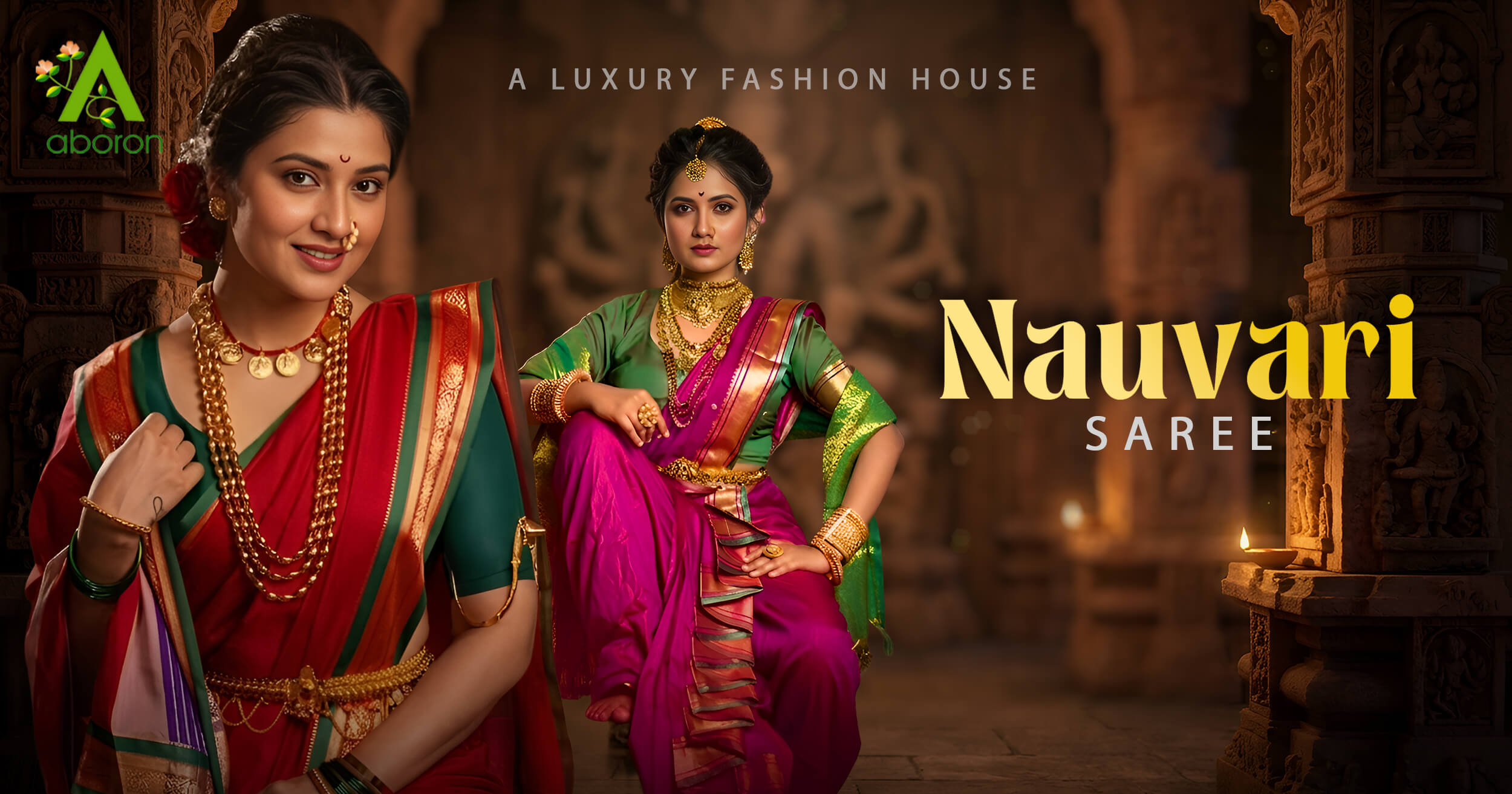
Hirkani. Have you ever heard the name before?
No? Here is the story for you.
The story originates in 17th-century Maharashtra. In the rugged heights of Raigad Fort, a milkmaid named Hirkani Bai was appointed to supply milk, curd and other dairy products to the households of the fort every day.
One evening, she finished late. By the time she reached the main gate, the gate was already shut.
Most people would have waited till the morning. But Hirkani had a breastfeeding baby at home. So she did something crazy.
She climbed down the cliff with no rope and no lantern, and by late night, she reached home to feed her infant.
When the story reached Shivaji Maharaj, he summoned her. No, No, Not for punishment, but to honour her courage. He even named a wall of his fort after her.
Now take a moment and picture this brave woman. No trekking shoes. No modern gear. Not even the comfortable sportswear.
Then how would she be able to do that? Because of the Nauvari saree. This is the Charm of the Indian Saree.
Nauvari Saree - The Nine-Yards Fabric holds the history of Maharashtra.

Nauvari is not just a nine-yard piece of fabric. It is a declaration that says Women must move, work, and live freely. Generally, a Saree is a six-yard fabric, but the USP of Nauvari is that it is nine yards.
It is also draped without a petticoat, in a Kashta Style, a special draping technique that resembles a dhoti or trousers.
The extra fabrics are used to wrap around the legs so that a woman can walk and bend easily, even climb mountain cliffs with a lot of comfort.
In Maharashtra, this saree has too many names: Kashta, Sakachcha, NavVari and even Lugada.
Researchers add a special spice to its history. During the Maratha Empire, women were not always sitting behind curtains and doors. They rode horses, carried the king's messages to the sultans, and some also went to the battlefield to support soldiers in war.
The Nauvari allowed them to do so without sacrificing their grace. During Chatrapati Shivaji Maharaj’s era, these sarees were popular among Marathi Brahmins.
Later on, the Lavani dancers are also put on these fabrics, as they go well with the quick footwork of the dance steps. Among the Koli community, Maharashtrian Nauvari saree drapings are very popular.
This fishing community of Maharashtra (typically migrated from Goa) uses two pieces of cloth for such draping. The long one they use to tie around their waist. And with the short one, they cover their upper body.
Marathi women adorned themselves in the Nauvari saree look during their Gudi Padwa festival. This festival is considered the traditional New Year of Maharashtra, where the victory and pride of the Marathas are celebrated.
Now, pre-stitched Nauvari sarees or readymade Nauvari sarees are available online, which keep the authenticity of the saree while making it easier to drape.
FAQs
1. What is so special about the Marathi Nauvari Saree?
Generally, sarees are around six yards long, But This one is nine yards long. So length is the speciality of this saree.
2. Who invented the Nauvari Saree first?
The Maratha Empire had invented these sarees first, and the unique draping pattern was also invented first for the flexible movement of Maratha girls, ages before feminism came into the market.
3. How to identify the original Maharashtrian Nauvari?
Its distinguished length makes it an exception from other sarees, but many people also recognise this saree by its draping style.
4. Can any amateur wear Nauvari?
Yes, they can, although the drape looks quite complicated, but once the pattern is cracked, anyone can wear it anytime. Either she is a beginner or a pro.
5. Which Fabrics are the best for the Nauvari Saree?
Paithani and Kanchipuram are the best fabrics for the Nauvari saree for kids.