

Banarasi Saree, The old art of Varanasi
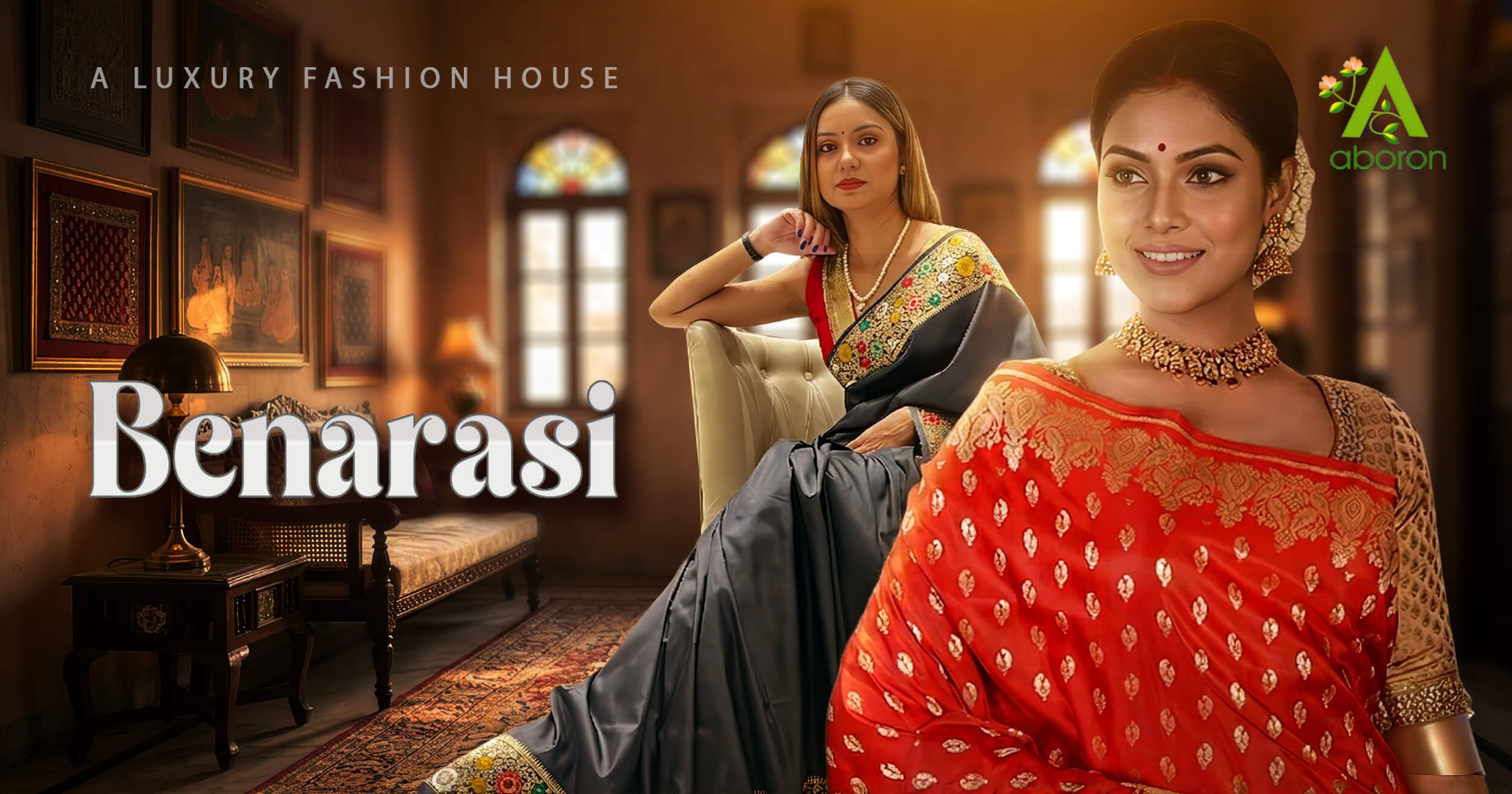
If you want to understand India, don’t read our constitution. Attend our weddings, especially those in North and East India. You will surely be mesmerised by our culture, traditions and our vibrant clothing heritage
And if the bride’s saree catches your eye, then chances are high that she is wearing a Benarasi saree. The glamour of which still preserves the Maharaja-like weight with grace.
So, where did the name ‘Benarasi’ come from?
These sarees are generally crafted in the ancient city of Varanasi, which is also previously called Benaras. As per the city’s name, the saree is named Benarasi.
From Jataka Stories to the Rigveda texts, this saree is mentioned in almost every ancient manuscript. In the epics like the Ramayana and the Mahabharata, this particular type of garment is described as Hiranya-vastra, which means gament that shimmered with gold.
During the time of the Mughals, especially around the 14th to 17th centuries, Benarasi silk weaving became popular. Intricate golden and silver brocades, delightful motifs and decorative pallu reflect the lights every time the wearer moves.
The process of weaving Benarasi
The city ‘Varanasi’, along with the neighbouring districts Gorakhpur, Chandauli, Bhadohi, Jaunpur and Azamgarh, has almost 45000 active looms, which directly contribute to Benarasi production today.
This cottage craft is practised by families who have done the same work for generations. Some artisans also possess high-level university degrees, but still, they choose to be weavers because of their passion for their art.
How is a Benarasi Saree woven?
The process starts by dyeing the silk in bright colours. Then the silk threads are stretched up to 45 inches to make threads.
After the threads are prepared well, 5600 strings run together through the loom to make a single Benarasi Saree.
For designs, the kalkas are first drawn on the graph paper. This process is called Naksha Patta. Then these designs are woven across the fabric with the help of perforated punch cards.
This card is nothing but an old-fashioned, computer-based clothing program where the machine decides which thread should rise and which should fall, one after another, to produce the perfect motif and jhallar.
Depending on how complicated the design is, weaving of a Banarasi saree can take anywhere from 15 days to six months to complete.
More than one weaver is required to weave a single Benarasi saree.
Types Of Benarasi Saree
There are six types of Benarasi Saree. Tanchoi, Jangala Vaskat, Cutwork, Tissue, Butidar and Cutwork
Each one carries their own personality.
Tanchoi is a specific geometrical-shaped motif styled banarasi, where the design is inspired by the Kashmiri Shawl. Whereas the Jangala is perceived as the most densely designed benarasi where the motifs are interconnected with each other with a Jaal.
Vaskat Benarasi is woven with a single thread, which is why it is considered the most lightweight Benarasi of all time.
Challenges of the Handlooms and how they were overcome?
The toxic chemical dye now used for dyeing the silk threads is polluting the river Ganga. This created concern among a lot of environmentalists who later demanded to stop weaving Benarasi on the banks of ganga.
But some good fellows from IIT-BHU came up with an alternative solution to fix the problem. They invented a natural technique. They started to teach the weavers to dye their fabric with pomegranate and marigold extracts.
This created a revolution in Benarasi silk-making.
Though like an impatient tailor, modernity tried to advocate for the powerloom these days. But in 2009, the government granted a Geographical Indication (GI) tag to Banaras, preserving the authentic beauty of the handlooms.
FAQs
1. Where exactly are the Benarasi sarees used?
Benarasi Saree for a Bengali wedding is famous. Moreover benarasi sarees for the reception are also very trendy these days.
2. Which luxury fashion house in Kolkata is famous for Benarasi sarees?
There are many, but it depends on the preference of the customer, which would be best for them. If someone wants to buy authentic Benarasi sarees for the bride, Then burrabazar shops are also available.
3. What is the price range of the Benarasi saree?
Generally, the price starts from 6000 and goes up to 2 lakhs
4. How can you identify whether the Benarasi saree is authentic or not?
With the government certification, you can identify it otherwise by touching the fabric; you can also identify the real Benarasi.