

Baluchari Saree: The Timeless Art of Weaving Hindu Mythology into Silk
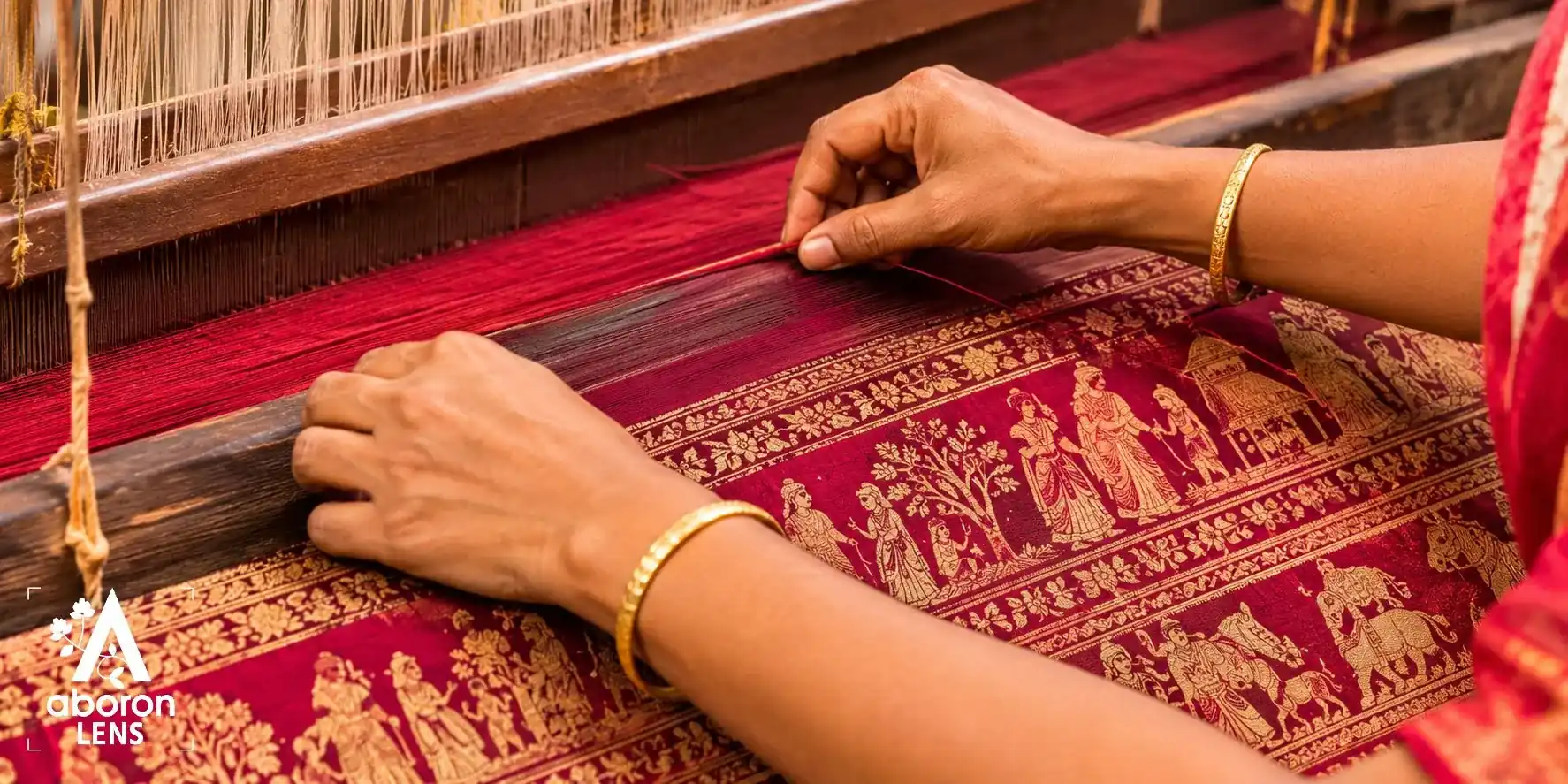
Clothing is more than an expression of personal style. You could call it a reflection of collective memory, faith and cultural identity. Some garments carry stories that transcend generations. They are linked equally with the divine, beyond just weaving. The Baluchari Saree embodies this beautiful connection. Who does not love it? Surely, you do too. A Baluchari becomes a canvas. There, mythology, history and craftsmanship come together. It allows India's divine narratives to live on through every drape. The Historical Roots of Baluchari Sarees You might have heard of Murshidabad quite a few times, ain't you? It is famous for several reasons. Let's make a list: Nawabi shan-o-shaukat. Rich history. Great culinary traditions. Kohitur mango. And yes, Shreya Ghoshal and Arijit Singh! But today, we're talking about the Baluchari saree. The story of Baluchari weaving traces its origins to Baluchar village in Murshidabad, West Bengal. The art flourished under royal patronage during the eighteenth century. Over time, the weaving tradition found a renewed home in Bishnupur. It became an enduring symbol of Bengal's artistic identity. The Bishnupur Baluchari saree gained recognition for its elaborate woven pallus. You have to mention the intricate storytelling patterns. Supported by generations of skilled artisans, this textile tradition evolved while preserving its distinctive character. Today, it represents the Bengal handloom heritage, carrying the legacy of regional artistry and cultural influences through generations of silk craftsmanship. When Hindu Mythology Meets the Loom What makes Baluchari particularly fascinating is its ability to transform sacred stories into wearable art. It draws on episodes from the Ramayana and Mahabharata. Moreover, its woven compositions bring gods, goddesses and legendary characters to life. You are bound to find it fascinating. In addition, scenes featuring Lord Krishna, divine interactions and moments from epic narratives make these sarees more inclined towards religion and spirituality. The saree turns into a visual chronicle of India's spiritual imagination. This tradition of mythological storytelling through textiles reflects how faith has historically influenced Indian artistic expression. It's not history written and printed on pages. It's history and mythology woven by artisans; they use threads. Thus, the cultural community gets transformed from one generation to another. These divine narratives in Indian textiles create a meaningful connection between devotion and everyday life. Stories Woven into Every Pallu: The Art of Baluchari Motifs Saree connoisseurs are literally all praise for the Baluchari saree pallu. Its elaborate Baluchari saree designs feature narrative scenes, ornamental borders and delicate figurative arrangements—a pure bliss to the eyes. Unlike conventional decorative patterns, you will get miniature paintings depicting episodes from epics and glimpses of historical life. Intricate silk-thread motifs add depth and character. Also, you will be thoroughly impressed by the figurative textile patterns. They reflect the artisan's imagination and precision. Every detail contributes to a larger visual narrative, making the pallu more than an ornamental element. It becomes a cultural canvas where artistic expression, mythology and heritage are beautifully intertwined. The Craftsmanship Behind the Timeless Weave Behind every exquisite drape lies the dedication of skilled weavers. Your Baluchari, genuine in quality, saree from a reputed fashion design house will have all these qualities. You find the weaving technique involves creating elaborate patterns through carefully planned weaving processes. It may include extra-weft work and Jacquard technology. Baluchari silk weaving demands precision, patience and an exceptional understanding of intricate designs. Each motif requires careful execution, transforming silk threads into detailed compositions. The craftsmanship of these heritage handloom sarees reflects generations of inherited knowledge. It's more than a textile-making process. It is an artistic tradition that sustains Bengal's weaving communities and keeps an extraordinary cultural legacy alive. FAQ 1. What makes a Baluchari saree unique? Its elaborate pallu, intricate silk-thread motifs and mythological storytelling distinguish it from other traditional Bengali sarees. 2. Where is the Bishnupur Baluchari saree made? It is traditionally woven in Bishnupur, West Bengal, a renowned centre of Baluchari craftsmanship. 3. Are Krishna motifs found in Baluchari sarees? Yes, Krishna motifs in sarees are among the religious themes represented in traditional Baluchari designs. 4. Does Baluchari saree have a GI tag? Yes, the GI-tagged Baluchari saree is recognised for its distinctive regional weaving heritage.