
Pochampally Saree, the Ikkat of Andhra and Telangana: a must-have in women’s wardrobe
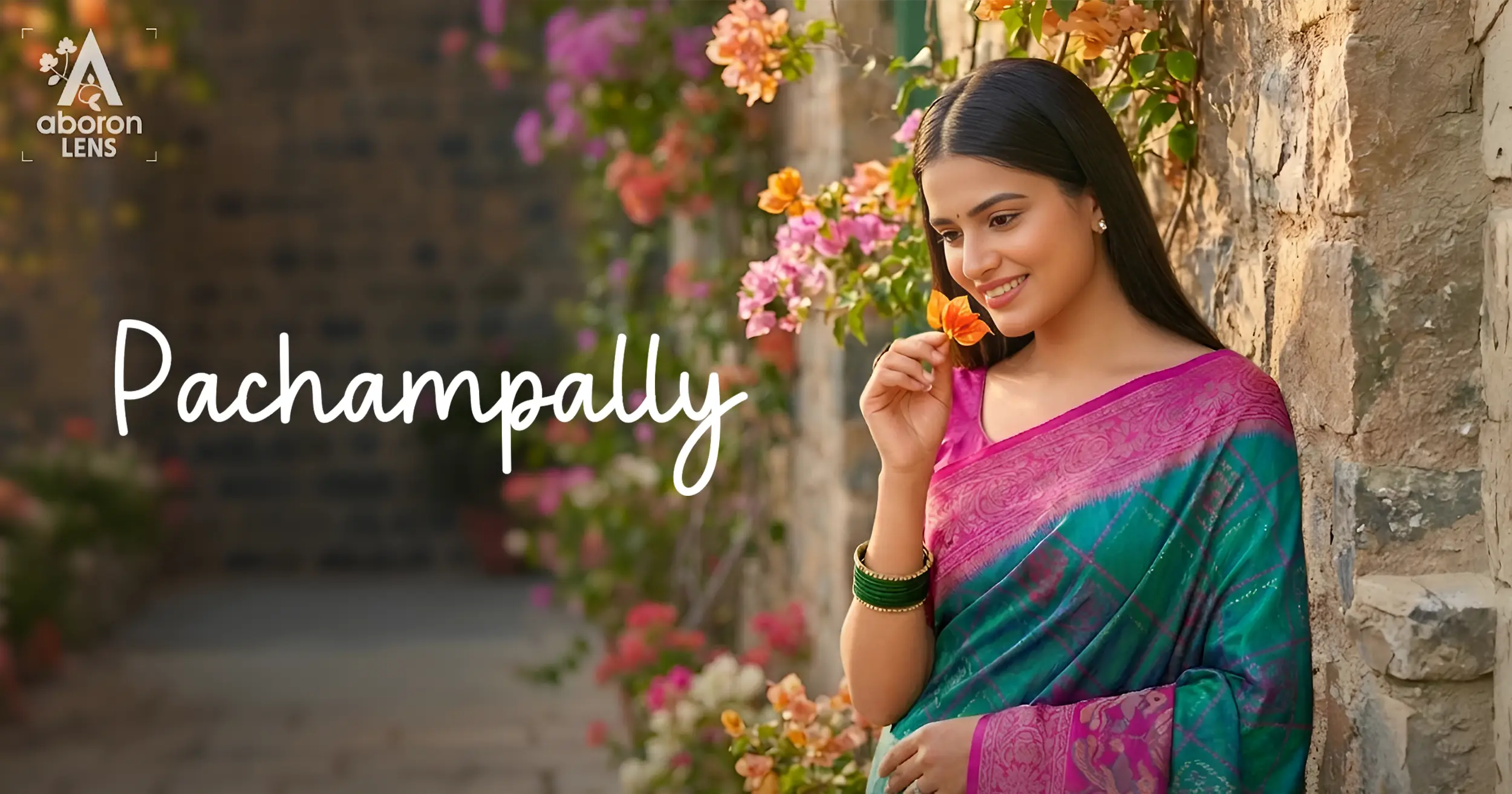
Imagine you decked up wearing a saree.
And as soon as you put it on, a strange humming tune reaches your ear, which is as old as the Ajanta caves’ time.
They are whispering the story of a fabric’s journey. How it travelled from the coast of Chirala to Indonesia.
How do you feel about listening to it?
Aren’t you get excited and feel proud - both at the same time?
Let me tell you, this is the magic of Pachampally. Whose beauty even make ‘Cannes red carpet’ shy.
Origin of Pachampally saree
If you are the biggest fan of Ikkat, then this ‘resist-dye’ art must have fascinated you as well.
When the world is into Luise Vitton and Gucci, the real weaving art is happening in the dusty looms around Hyderabad.
Now, let me tell you, how did this art pop its head?
Its history is as fine as an old wine. The whole Pachanpally Ikkat weaving technique has started from the coast of Chiral. Though ikkat in itself is a 5000-year-old art, inspired by the geometric designs of Egyptian pyramids.
But Pachampally Ikkat made its own distinctive identity from the generic Ikkat.
History and Evaluation of Pachampally Saree
Previously, this craft travelled with the traders from the Masulipattanam coast to Indonesia. And our generous artisans taught the pribumis (Indonesians) a few basic techniques of Pochampally weaving.
Even if you watch some ancient mural paintings from 1720. You will find a lady who draped herself in pochampally. This showcases that this art is old, but not as much as Jamdani or Kanjivaram.
Sometimes ikkat is also woven in ‘Telia Rumal’ style, an ancient art considered the ancestral father of Andhra ikkat. and gain popularity for its intricate squares and oily texture.
How is the Pachampally saree made?
But, you must be wondering what the difference is between the general Ikkat fabric and the Pochampally fabric?
Let me tell you.
In General, the Ikkat is made of the tie and dye process. In such a process, the threads are tied and dyed even before the weaving starts, but in Pochampally, the designs are done while weaving the saree.
Pachampally’s designs also went through a lot of evaluation.
Back in those days, the weavers were stuck to only sharp and clean geometrical designs. But in the mid 1900’s, when the All India saree market opened for Pochampally, Devanga and Padmasali, the renowned weavers’ community decided to show off their talent as well.
Instead of geometric motifs, they started doing complex floral designs on the pallu and border of the saree.
Today, the Pachampally sarees that we see in the market are the upgraded version of these.
The dying process has also changed now; in the place of chemical dying, different organic techniques are now introduced to retain the colour intact forever.
So pagdubandhu or chitkimore, the local name of Pachampally, has now gained the ‘must-have’ status in women’s wardrobes, not only because of its beauty but also the eccentricity of the fabric.
FAQs
1. What is the Pachampally Saree Price?
If you search on Google with the phrase, ‘ pachampally saree online’, you will get to see the price comparison of the saree. But in general, the pricing starts from 5k and reach upto 50k, depending upon the work on the saree.
2. Is pachampally saree history interesting?
Yes, Pachanpally saree informations are quite interesting, but it depends upon which state’s history you want to know about. Pachampally saree Hyderabad, or Pachampally saree Andhra Pradesh?
3. Are Pachampally saree designs attractive?
Yes, they are, now that, after getting the Pachampally saree GI tag, even the designs are getting more variations day by day.
4. Which jewellery would go perfectly with the Pachampally Saree styling?
Any Minakari jewellery or the silver jewellery would go well with this saree
5. Is ikkat and Pochampally the same?
Pachampally is another form of the Ikkat dying method.
6. What is Pochampalli Saree famous for?
The geometric-shaped designs are famous in pachampally saree
7. How to identify original Pochampally sarees?
The blurred borders and the silk mark certification are the real source to identify this saree’s originality