

One Land, Many Calendars: Know The Diverse New Year Traditions of India
If there is one thing Indians love to argue over, that is which state's biriyani is superior. This never-ending argument can lead to a terrifying WWF among folks, or else it can also lead to a discussion of the festivals, honouring which biriyani can be made, ordered, or eaten.
Though having biriyani itself is a festivity to us. But we must say, occasions evoke the urge to have it. And it is needless to say that Indians are pretty good festive-enjoyers. Wedding to Puja’s or even the New Year's Eve - we love to celebrate it twice, thrice, sometimes more within a year.
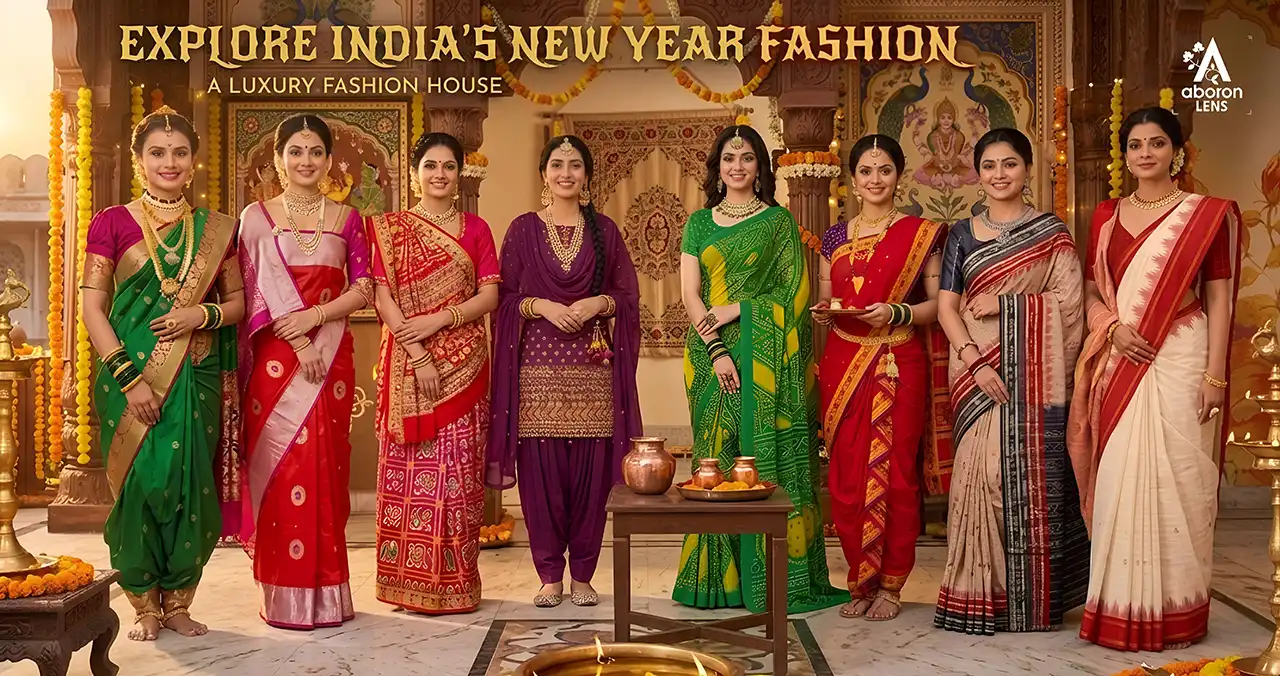
India is the only place where the New Year has been celebrated six times. Every state has its own distinct way of celebration. Each has a different name along with different customs, food, and attire.
So if you get bored, press the refresh button of your life, because here is the rundown of some folks’ New Year’s madness.
Poila Baishak: Bengali New Year
For Bengalis, Poila Baishakh is all about Haal Khata, good food and Garad saree. Bengalis’ emotions are not only constrained in Tagore and aluposto (a Bengali potato dish cooked in poppy seeds) but also in enjoying the festivity.
That's why there is a famous Bengali folk quote which says, “ baaro maase, tero parbon”, which means, there are 13 festivals in 12 months for Bengalis
The early morning dances and recitations, along with soothing rabindrasangeet is the way how bengali new year starts. Then the meets and greets, with friends and relatives, the mouth- watering lunch with 10 to 12 Bengali dishes. Everything is enjoyed to its fullest on that day.
During this time, as the humidity is quite high in the air, that's why many prefer Tant sarees like Dhonekhali, Begumpuri, Fulia, atpoure, Shantipuri, to avoid the hotness of summer.
Bihu: Assamese New Year
Bihu represents the farming calendar of Assam. There are basically two kinds of Bihus, which are celebrated by the Ahomiyas: Bhogali Bihu, which celebrates the harvest. And Kati Bihu, which celebrates the protection and preservation of the corps.
But none of them is considered the New Year.
Rongali Bihu is considered the New Year festival of North- East. more than just a religious festival, it has become a full-blooded celebration of the spring’s arrival.
The festive essence is best captured during the rhythmic bihu dance. With the beats of the dhol, the iconic hand and leg coordination will lead your soul to dance.
The traditional Mekhla Chador, crafted from Muga silk are festive uniform of Ahomiyas. But Eri silks and the indigenous Assam silks are also preferred by many north-east beauties.
But without the Kharu ( the silver bangles) and the Jonbiri ( moon - shaped neckpeice), the look seemed half-finished
Pana Sankranti: Odia New Year
The Maha Bibhusa Sankranti is called Pana Sankranti in Odisha. The day when the sun crosses the equator is called ‘Pana Sankranti’.
This day is nothing but the day when Chiranjivi Hanuman was born.
The name of the festival, Pana, is derived from a special drink of Odisha, made out of wood apple, curd, sugar, and spices.
Traditionally, this drink is offered to lord Jagannatha first, then it is distributed among his devotees as prasadam.
The tradition of making such a drink signifies taking the protective shield of the body to combat the rising heat.
Khandua pata and sambhalpuri are generally the common attire of this festival. But any glamorous silk or cotton that prevents the body from the seashore heat is certainly a choice.
Gudi Padwa: Maharashtra’s New Year
In Maharashtra, the New Year is celebrated, commemorating the victory of Chatrapati Shivaji Maharaj. This festival is basically a shoutout to Maratha’s triumph against the Mughals. And as a festive attire, the Nauvari saree becomes a part of this grand feast.
This nine-yard powerhouse garment, which is draped like a tunic, was originally designed for the Maratha ladies for horse riding.
Yes, dear reader, you read it right.
These fabrics are created so that Maratha women could lead cavalry, fight alongside men, and do their household work without worrying about wardrobe malfunctions.
This ‘boss lady’ attire perfectly radiates a woman’s beauty when it is coloured in dark blue or dark redish pink. The Paithani silk's glamour even doubles when the zari work is done throughout the body and pallu.
If the whole Gudi Padwa look still seems incomplete, then add some matching golden jewellery along with the saree. It will surely uplift the saree’s eccentricity to its peak.
Baisakhi: Punjab’s New Year
In Punjab, Baishakhi signifies the harvest of the Rabi crops. But long before, in 1699, on this particular day, ‘Khalsa Panth’ was formed by Guru Govind Singh.
You must be thinking, who is he?
He is one of the most prominent Sikh leaders who formed a ‘saint-soldier’ group, Khalsa Panth, mottoying to protect their community from inequality, injustice, and irreligion.
Baishakhi is also celebrated to recall his immense contribution towards his community.
This day is celebrated with dhol beats and bhangra.
During this festival, the traditional Phulkari saree ( the saree with floral work) is genuinely the showstopper, but nowadays, many opt for Salwar Kameez to maximise mobility.
Handloom sarees, which are traditionally embroidered, also have their place in punjabi chori’s heart.
The custom-made jewellery goes well with such sarees. But many now preferred vibrant junk jewellery to preserve the colourful vibe of the festivity.
Handmade jewellery looks good with such a saree. But keep in mind, the look should not overrun the natural beauty.
Bestu Varas: Gujarati New Year
The day after Diwali is considered the beginning of the new year among Gujaratis. According to the Vikram Samvat calendar, this day is considered the start of the year.
It is the day when the Gujju business owners do Chopda Pujan. During the puja, they invite goddess Laxmi and Lord Ganesh to bless their balance sheet for more profits in the upcoming year.
The Panetar, or the vibrant bandhani, is the premium standard festive attire worn by the Gujarati girls on this day.
But Patan Patola, along with the 24k gold or diamond necklace, also looks royal. Traditional Gota patti with vibrant zardousi work on pallu is also very much in New Year fashion among the Gujaratis. Now modern girls these days prefer modern silk or lehenga choli for the easy-to-handle theory.
Cheti Chand: The Sindhi New Year
The Sindhi community celebrates their patron saint Lord Jhetlal’s birthday in their new year. According to their belief, Lord Jhethlal was the incarnation of the water god, Varun Dev, which is why his birthday is considered the start of the lunar year.
It basically starts from the 2nd day of the Chaitra month. This day is the bonding day of those who belong to the Sindhi identity and carry their heritage.
On this particular day, Sindhis get together near a water body and offer the water a plateful of flour, lamp, sugar, candy, cardamom, and fruits with a rhythmic ‘chej’ dance.
Suththan cholo is the traditional Sindhi suit, which is a must-wear festive outfit for Sindhis. But many Sindhi ladies have now changed their taste with the contemporary world.
Many woman now opts for the Ajrakh suits, the Gaj embroidered suit paired with Bandhani dupatta and meenakari or polki jewellery. This will perfectly radiate the Sindhi charm.
Marwari New Year
The Marwari New Year starts from the first day of Chaitra. During this time, the Marwaris do clean and scrub their house, decorate it with traditional floor art, Mandana, and merigolg flowers.
This is one of the pivotal times for the Marwari business community, where the baniyas (businessmen) seek blessings from the Ghataspathana for abundance nd prosperity.
Dignity, style and pride - Marwari’s festive attire revolves around these three. Rajput dresses mean the vibrant Leheriya or Bandhani fabric, with elegant Borla, a ball-shaped maang tikka or aad, a rectangular choker, worn around the neck.
Gota patti work is also one of the most elegant attire, loved by Rajasthani futaris ( pretty girls).
Ugadi: The New Year of Karnataka, Andhra Pradesh, and Telangana
Karnataka, Andhra Pradesh, and Telangana celebrate Ugadi as their new year. South beauties just need a reason to wear Kanjivaram. Then how are they deprived of doing so in their new year, Ugadi?
In different regions of the South, ladies do wear Kanjeevaram or traditional Gadwal, pairing them with the gold or demigold neckpieces.
But Ugadi’s attire doesn’t constrain itself only within those two. There are also other choices.
Mysore silk, Pochampally, and Arani silks also belong in the list of favourites to southern bronze beauties. And if they are putting on together with golden or hand-painted customised jewellery, then the created look seems nothing but royal.
By the way, do you know what the meaning of Ugadi is?
The name actually derived from ‘a must-have new year soup’, named Ugadi Pachadi, which is basically a six-taste South Indian dish that represents different flavours of life.
Puthandu: Tamil Nadu’s New Year
The Tamil New Year is called Puthandu. Tamilians believed that on this particular day, Lord Brahma started creating the universe. That's why they celebrate this auspicious day with a trayful of fruit and gold, offering to the creator at very early morning of that day.
Tamilians believe that in exchange for this offering, their wish will get fulfilled.
And as the traditional attire, Kanjivaram would always get its first preference in this New Year festive.
But Legend says the weavers who make the ‘Kanjivaram’ are descendants of Sage Markanda, the master weaver of the Gods, which perfectly defines why the price tag also feels heavenly.
Thatswhy along with Kanjivaram, the other silks like Mysore, Chanderi, silk-cotton blend Kanchi soft silk, and Venkatgiri, the only cotton of South India, are also bought and worn by South beauties in Puthadu.
Apart from the saree, Pavadai dhavani ( the long skirt along with chunri), is also worn by the southern young ladies.
But the gorgeousness still remains faded if they are not paired with temple jewellery and heavy jhumkas.
Vishu: Kerala’s New Year
In Kerala, Vishu, the new year, is celebrated not only with loud crackers, but also with an arrangement of flowers, grains, and gold. This signifies that the upcoming year should be ‘a year of abundance.’
The name Vishu is derived from the word ‘Vishukkani’, which means a trayful arrangement of flowers, grain, and gold.
The traditional attire for this festival is the Kasavu saree, the iconic ‘cream and gold’ handloom saree, which must contain some eccentric zari work in its border.
Previously, it depicted the societal belonging of the wearer. But over time, the custom has changed. Now, the Malayali girls prefer clean and minimalistic looks. That's why they prefer neon-coloured tissue silk or kara saree with temple jewellery, which can perfectly radiate a calm vibe with elegance.